Xinjiang Unveiled: The Foreign Tourist
The second part of this guest written series explores Xinjiang through our eyes as foreigners — navigating a land filled with unexpected challenges, disorienting discoveries and glimpses of humanity.
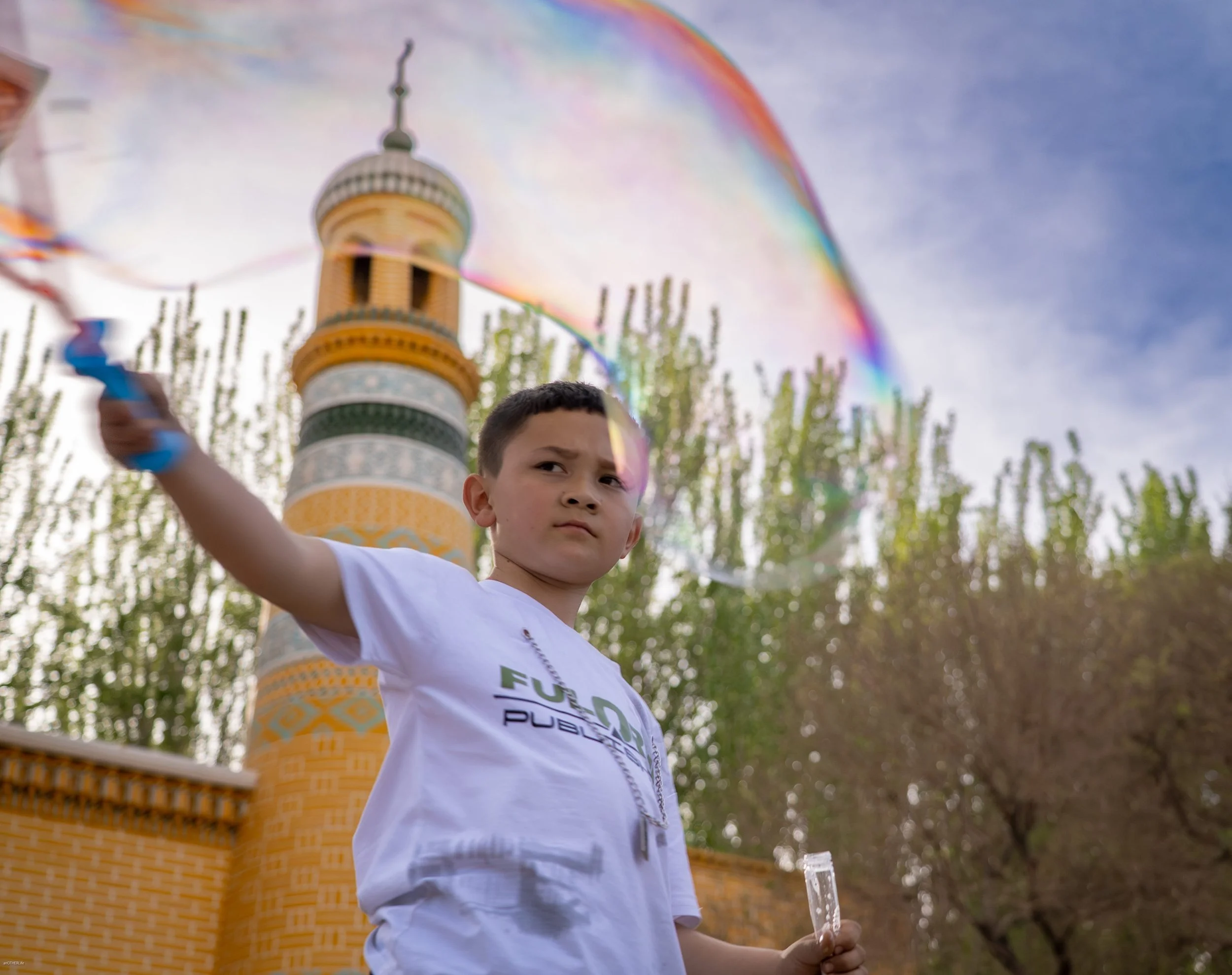
A Uyghur boy plays with bubbles outside a mosque in Western Xinjiang — a fleeting moment of normality in a region where faith and freedom are closely watched.
We had spent 2 months in the wintry Mongolian wilds, living with nomadic herdsmen, proud eagle hunters, and reindeer-herding forest dwellers. The people and places were magnificent but living conditions were tough. Our bodies ached for urban creature comforts that our next destination — China — could potentially bring.
Our plan was to enter through a land border from Mongolia to China’s westernmost province — Xinjiang — home to the native Uyghurs, a Turkic Muslim people, who have lived there for over a thousand years. But when we arrive at the border town, we hear unsettling stories from other foreign travellers that leave us anxious:
1. Xinjiang is dangerous, and the Uyghurs are wary and unwelcoming toward foreigners.
2. Chinese authorities will scrutinise your phone, and could detain you for possessing any vaguely political material.
3. The pervasive surveillance state tracks your every move in Xinjiang. Taking the “wrong photo” could get you arrested, and plainclothes officers will shadow you without your knowledge.
We brace for the worst. We scrub our phones — hiding photos of Chinese political landmarks like Tiananmen Square and deleting irreverent WhatsApp chats poking fun at the Chinese government. We even mail our DJI drone back to Singapore, fearing it might be seen as a “secret” surveillance tool and lead to confiscation — or worse, our detention.
The Shining City
Our journey begins on a rickety bus rumbling out of a dusty Mongolian border town. After three hours of trundling across barren desert plains dotted with Bactrian camel herds, we are jolted awake — not by a bump in the road, but by the sight of a silver giant.
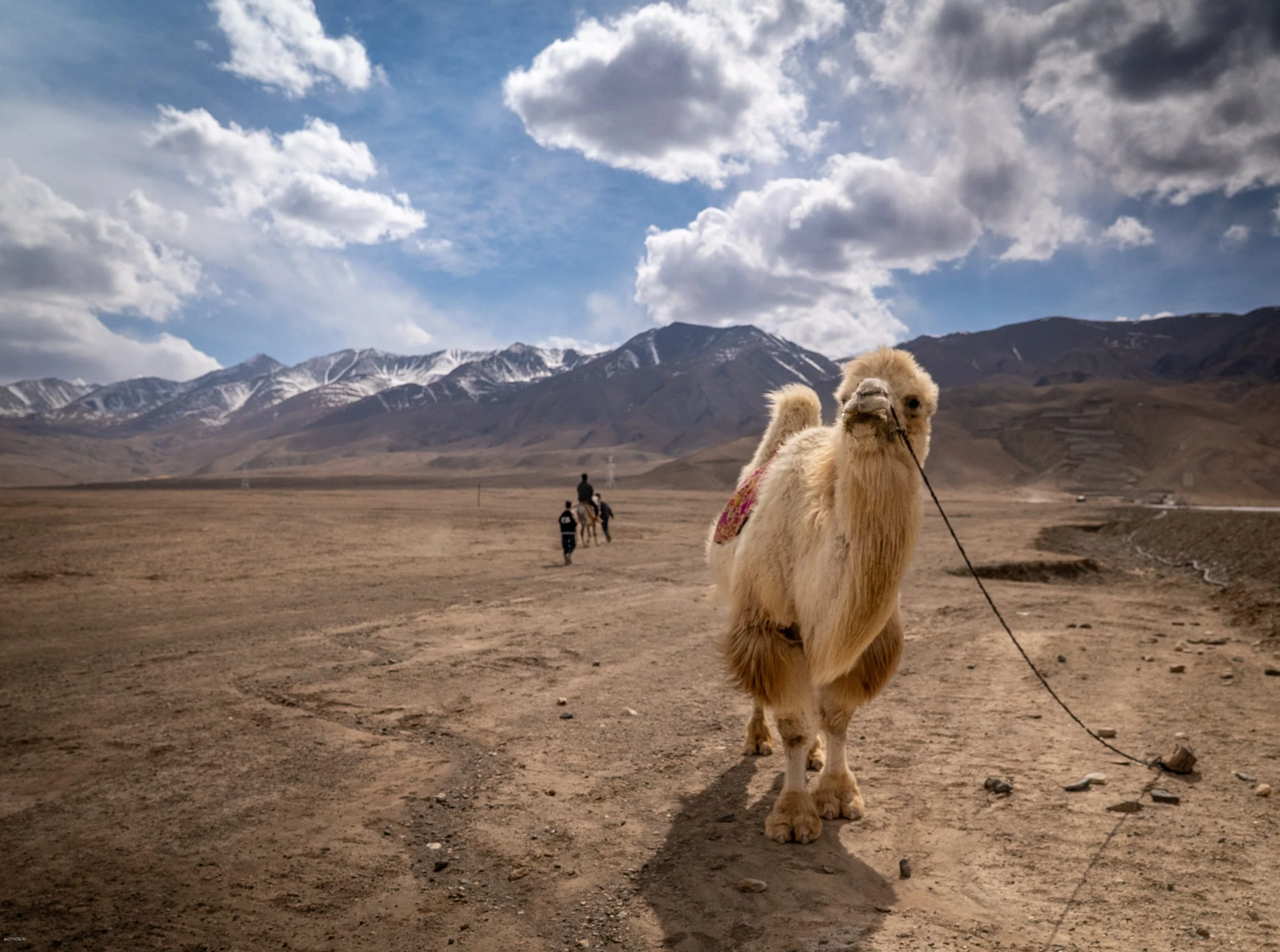
We encounter a Bactrian camel up close in the borderlands of Mongolia and Xinjiang. These hardy creatures have played a vital role in the nomadic traditions of the region for centuries.
Rising out of the sand like a shimmering deity is the Chinese immigration checkpoint: a massive, gleaming complex that declares to its subjects below, civilisation begins here. It feels absurd and impressive in equal measure — an imposing symbol of order on the edge of wilderness.
We approach gingerly and put on our friendly traveller faces. We are waved through an X-ray scan, our bags only perfunctorily checked, our phones untouched. Our smiles are met with quizzical looks. We clearly don’t look Mongolian or Han Chinese, and the immigration officers struggle to understand who we are and why we are crossing a land border in the middle of nowhere. Eventually, one of them, a Uyghur woman, asks us, in thickly accented Mandarin, where we are from.
“Xin Jia Po,” we reply, referencing the Mandarin name for Singapore.
She pauses, puzzled, searching her memory, until a spark of recognition lights her face.
“Ohh! Yu wei shi!” she exclaims, referring to Singapore’s iconic Merlion.
The immigration officers around her chuckle quietly, and we nod eagerly, relieved that our national symbol served a purpose beyond triggering selfies from tourist hordes.
Apparently, the border guards have never processed a Singaporean passport since COVID restrictions were lifted, so we are asked to wait while they run checks. Thirty minutes later, we are waved through — no drama, no rummaging, no interrogations. Just warm smiles and genuine curiosity. It is nothing like the horror stories we’d heard.
A Xinjiang Welcome
We board a minibus that takes us to Urumqi, the capital city of Xinjiang province. Confident in our usual travel instincts, we figure we’d find a place to stay on arrival. When we ask the driver for recommendations, he looks shocked. “Only very few hotels in Urumqi accept foreigners,” he warns.
L looks at me, perturbed. But I dismiss her concerns, “We’ll figure something out,” I say with an air of bravado, “just like we always do.”
We arrive in the capital at nightfall and the driver drops us off at an ageing hotel looking like it was conjured up from a previous century. He insists this is the only place that will take us. I quietly baulk at his suggestion, telling L I can find a nearby place that suits us more.
Its giant lobby teems with tourists sporting boxy ‘90s suitcases and faintly desperate comb-overs, as well as a once-grand chandelier that now flickers in Morse code, possibly trying to signal for salvation. I shrug it off and step outside in search of dinner and a bed.
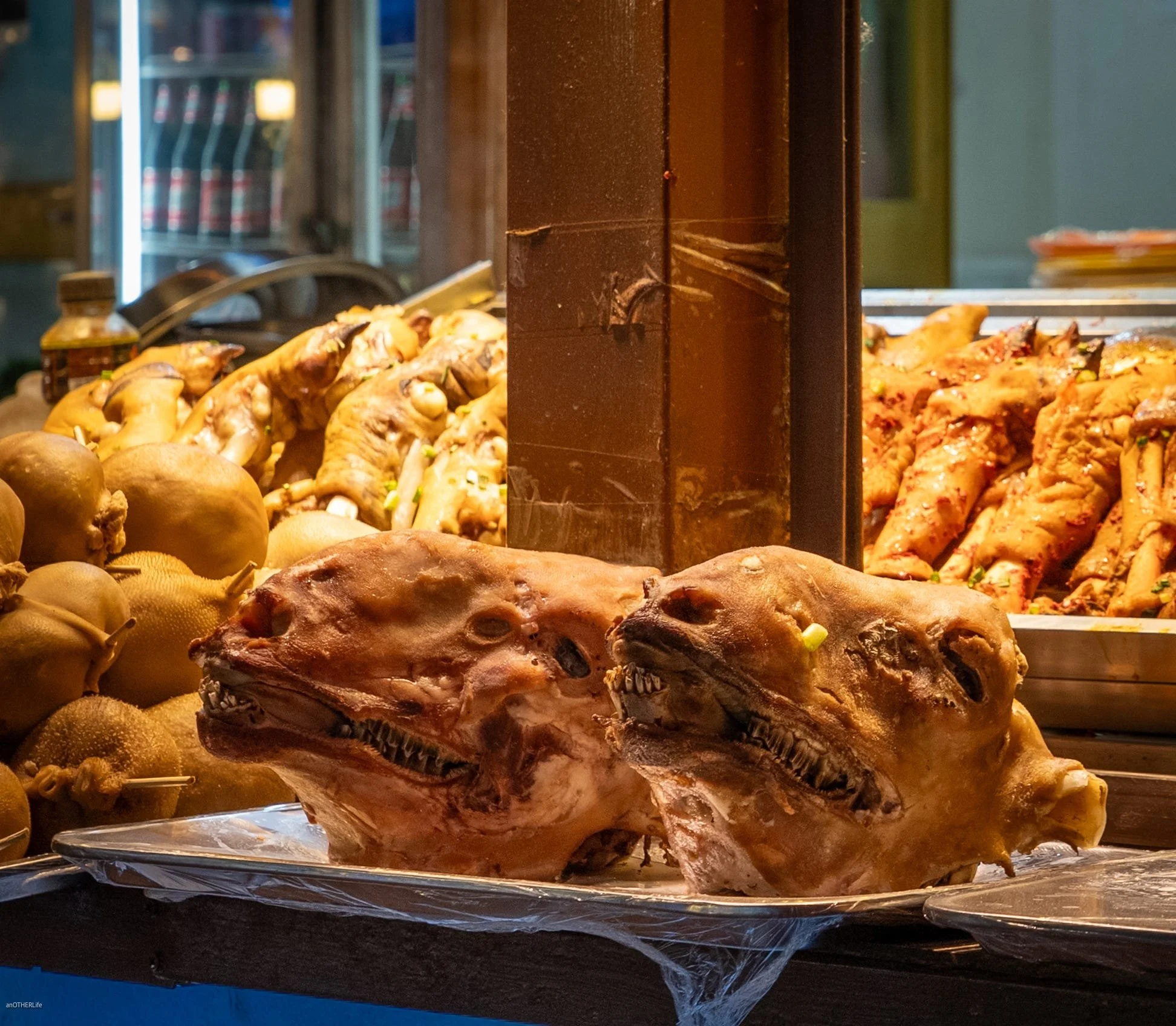
Outside our hotel, we see a variety of gourmet food, like this boiled sheep's head (right) and stuffed lamb stomach (left). We even discover roasted goose and ostrich eggs, which we enjoy as a late-night protein snack.
An hour later, I return to the hotel and collapse onto a tired sofa, drained and defeated. I tell L I had enquired at five guesthouses, but was turned away the moment I showed my passport. Excuses ranged from “we only accept Chinese nationals” to “our foreign passport scanner is broken”. L glares at me, her lips pursed with lingering annoyance.
With midnight fast approaching and nowhere else to go, we return to the reception. The woman behind the desk glances at our passports and says, “Sorry, we don’t accept Singaporeans. Only guests from Central Asia.”
My surprise, coupled with exhaustion, metastasises into shock and moral outrage. Angered by her racially prejudiced remark, I erupt into a confused jumble of mangled Mandarin phrases, which on hindsight made me look more like a blustering clown than a formidably incensed customer.
The receptionist listens patiently to my rant before calmly explaining: only certain hotels in Xinjiang are authorised to host foreigners — and even those permissions vary by nationality.
In protest, I point to the lobby slogan, which proudly declares “Xinjiang welcomes ALL tourists”. Without missing a beat, she counters and points to a police station outside the hotel, saying with mock helpfulness, “Sure, if the police give the green light, I’d be thrilled to check you in.”
We call her bluff.
At the station, we lay out our case. To our surprise, they confirm that, legally, hotels are supposed to accommodate all foreign guests. But — as in many places — theory and practice live in separate worlds. The police tell us this issue is between the hotel and us, and is not their responsibility.
Though I’m standing there with three officers, I begin acting like a self-righteous tourist who’s clearly forgotten the no-nonsense reputation of Xinjiang’s security forces. But the Chinese officers remain calm, professional — and, unexpectedly, offer to walk us back to the hotel to sort things out. After nearly an hour of half-baked bluster, sheltered behind my newfound cloak of authority, L and I finally emerge victorious… as newly minted hotel guests.
We march triumphantly to our second-floor room.
It smells of mildew and regret.
But at 2 a.m., we call it home.
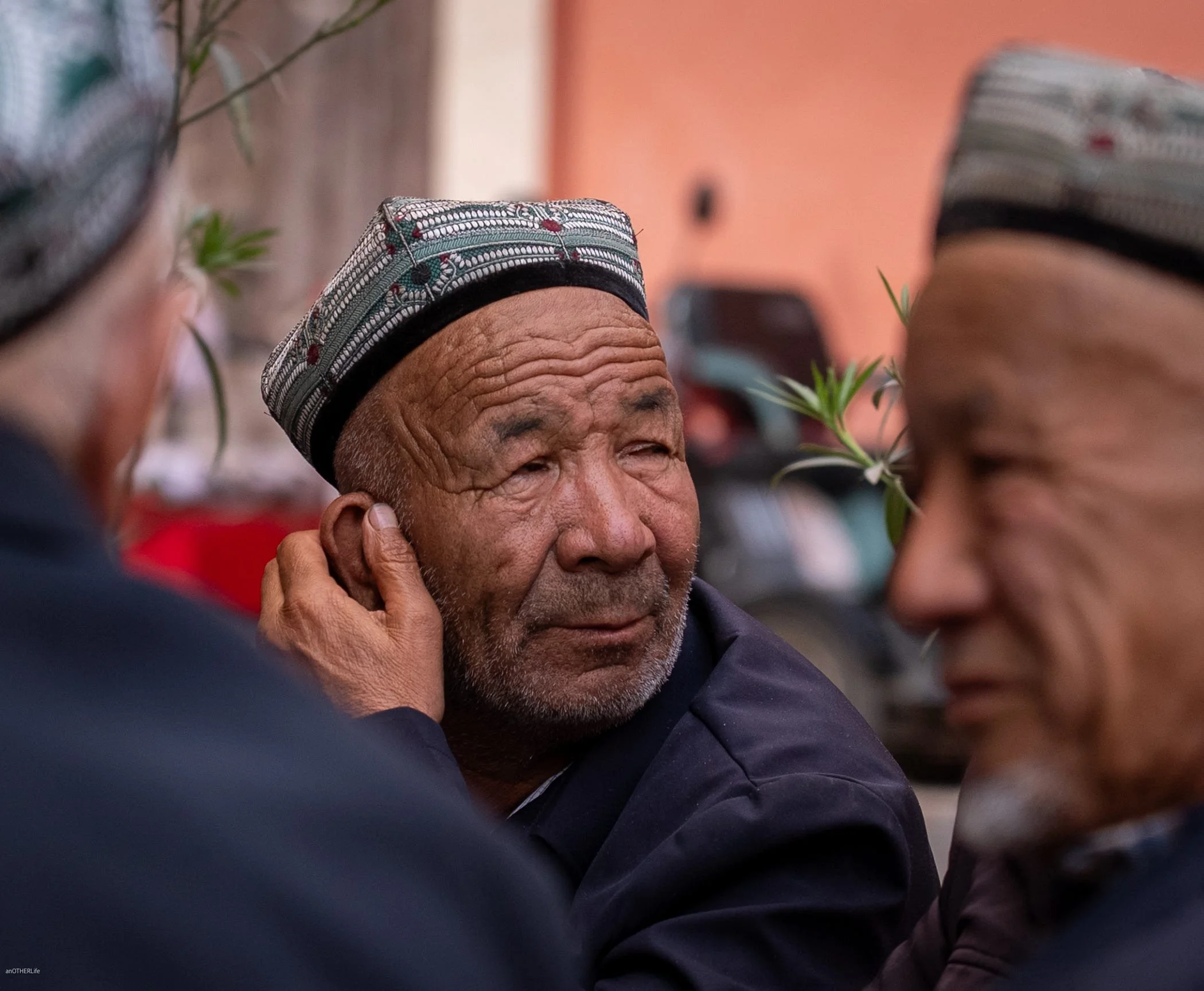
A middle-aged Uyghur man shares a quiet moment over tea with friends — an everyday ritual that speaks of the deep sense of community and hospitality woven into Uyghur culture.
Whispers of Empire
While Imperial China had claimed parts of Xinjiang over the centuries, it wasn’t until around 250 years ago — under the Qing dynasty — that the region was firmly folded into the empire. Since then, waves of local uprisings and short-lived Uyghur-led republics had risen and fallen, each eventually subdued by Chinese forces. The Communist Party’s victory in 1949 sealed Xinjiang’s fate. Since then, the state has tightened its grip, quelling unrest and asserting control in ever more sophisticated ways.
We have a routine whenever we arrive in a new country. As slow travellers, rarely booking far ahead, we usually spend the first day or two settling in — sorting out SIM cards, exchanging currency and figuring out how things work. Urumqi is no different. After a chaotic first night, we take the day to catch our breaths and get our bearings. First stop — buying supplies and finding food.
Next, we ask around for mobile phone plans but find ourselves bounced between shops, many of which tell us their SIM cards are for Chinese nationals only. Eventually, we find a store that sells foreigner-approved cards. A Uyghur staff member helps us register, but the process, which usually takes under ten minutes in most countries, becomes a penance in patience and paperwork. Forms, identification checks, and a fee to have our passports “translated into Mandarin for registration purposes” turn a simple task into a bureaucratic marathon.
While waiting, we chat with the Uyghur saleswoman, careful to tread lightly. We know something of the tensions between the Han Chinese and Uyghurs, so we ask her — casually — how things are. Occasionally, we glance at the armoured vehicle idling outside the shop, its mounted machine gun glinting in the sun. She understands our question, and with a weary smile, she whispers, “I have no choice. I have children, so I work for a Chinese company now.”
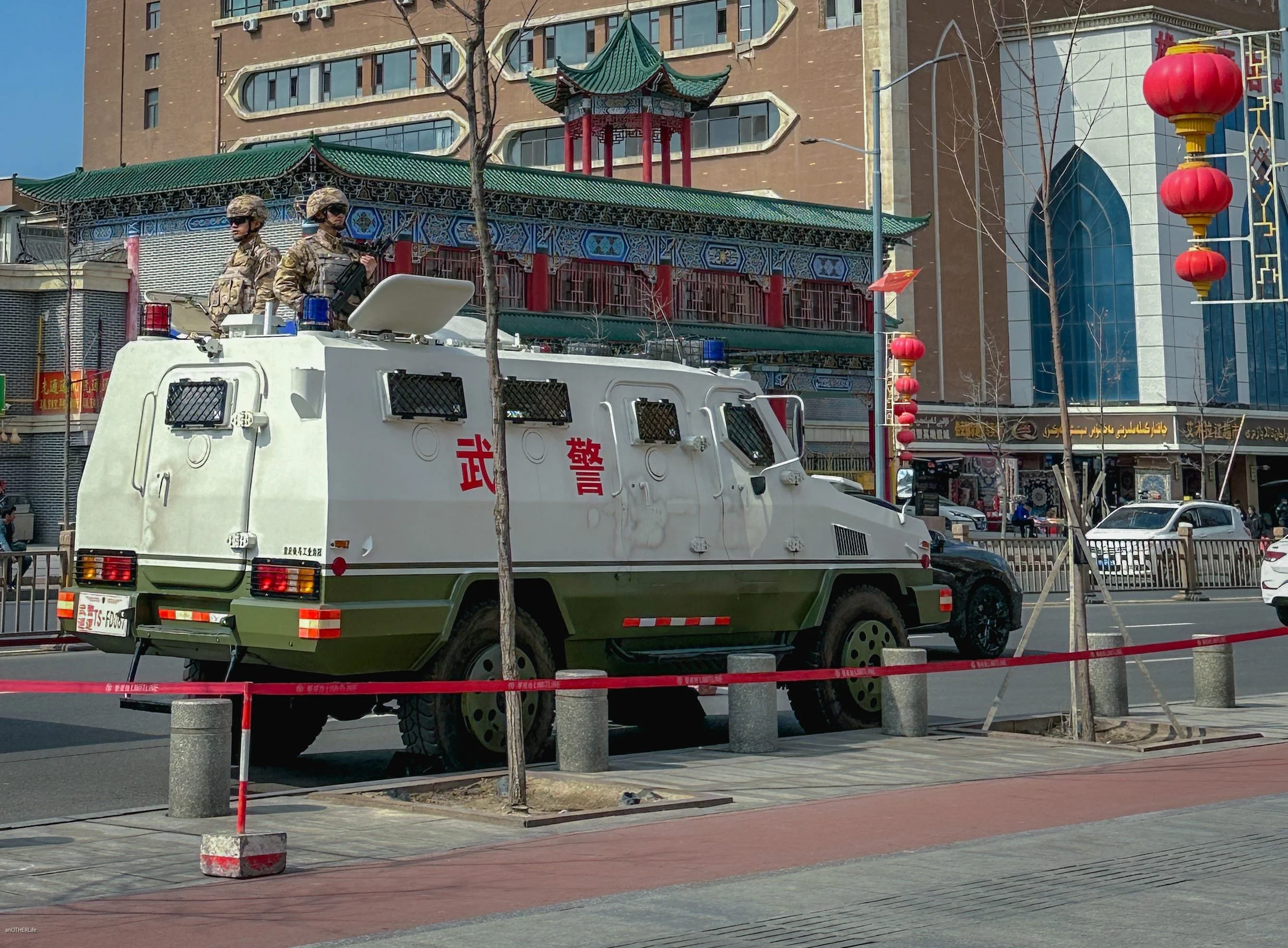
Armoured personnel carriers with machine gun-toting police are a common sight in Urumqi. This one was parked moments away from our hotel, a stark reminder of the region’s heightened security presence.
Across the road, the Grand Bazaar buzzes with life — a beautifully renovated space with mosques, minarets and markets filled with souvenirs, snacks, and tourists. Chinese visitors wander beneath domed walkways while black-vested riot police patrol the grounds with assault rifles.
Urumqi had seen deadly riots in 2009 — ethnic clashes between Uyghurs and Han Chinese that left some 200 dead and thousands injured. According to state media, most of the victims were Han. In the years since, Beijing has built a vast surveillance system here, locking down public spaces in the name of stability. Many see this as the reason for Xinjiang’s “peace”.
Others call it something else entirely.
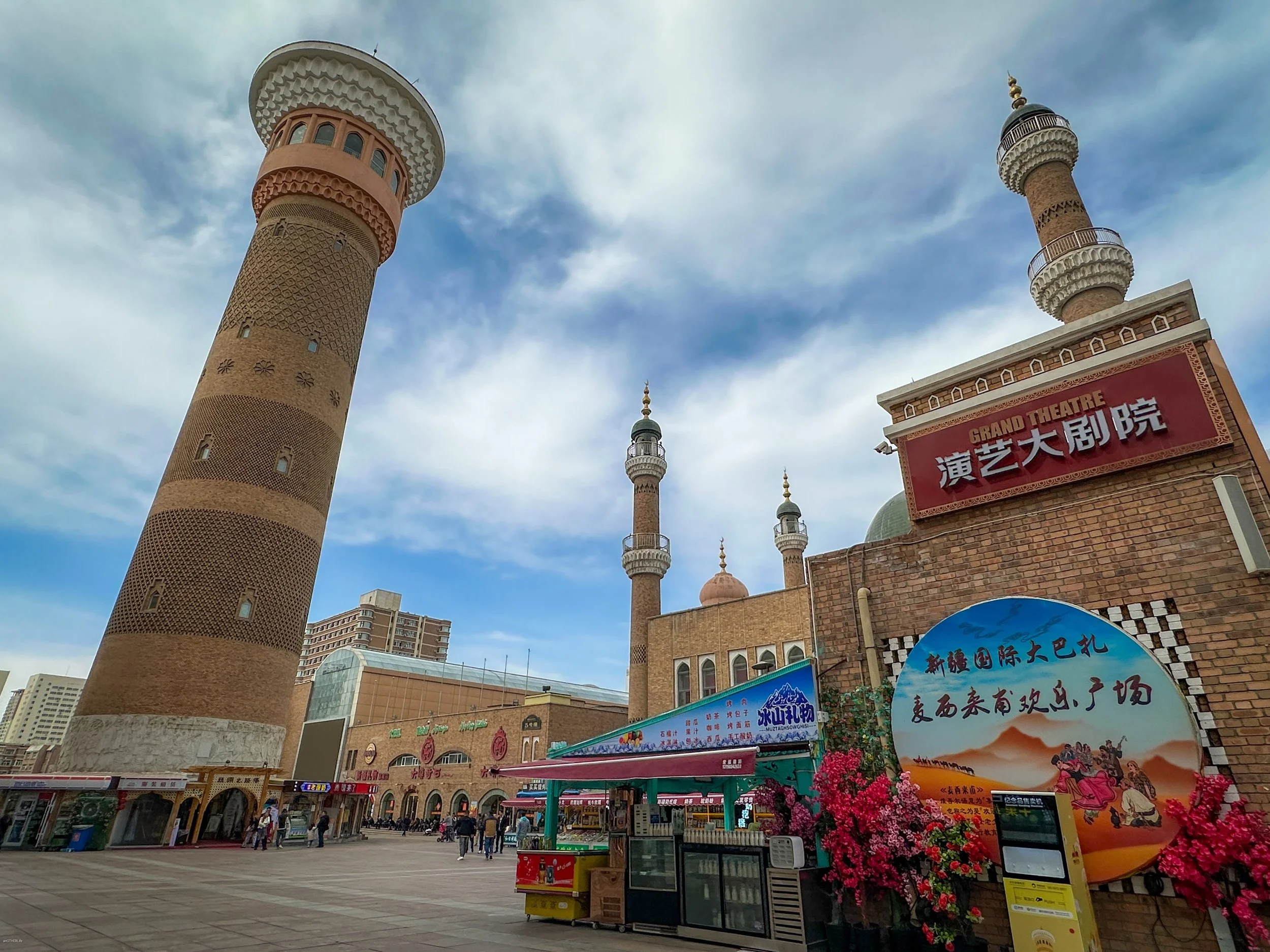
We spent hours strolling through Urumqi’s Grand Bazaar — where every angle is Instagram gold, and every price tag is a gentle reminder that beauty doesn’t come cheap. Perfect for photos, less so for wallets.
The next day, we visit the Xinjiang Uyghur Autonomous Region Museum — a sleek, modern building with ancient artefacts, mummies from Silk Road tombs, and detailed exhibits on dynasties past. Each floor is devoted to a different era: Han, Tang, Mongol, Qing.
Amid the journey through history, I was reminded of a museum I visited in Alaska years ago, where exhibit signs openly acknowledged the U.S. government’s violent treatment of Indigenous peoples. There, history carried a cross of contrition. In Urumqi, history came with a declaration.
At the end of every exhibit, a plaque summarised the lesson of that era. The conclusion was always the same:
From time immemorial, Xinjiang and its people have always belonged to China.
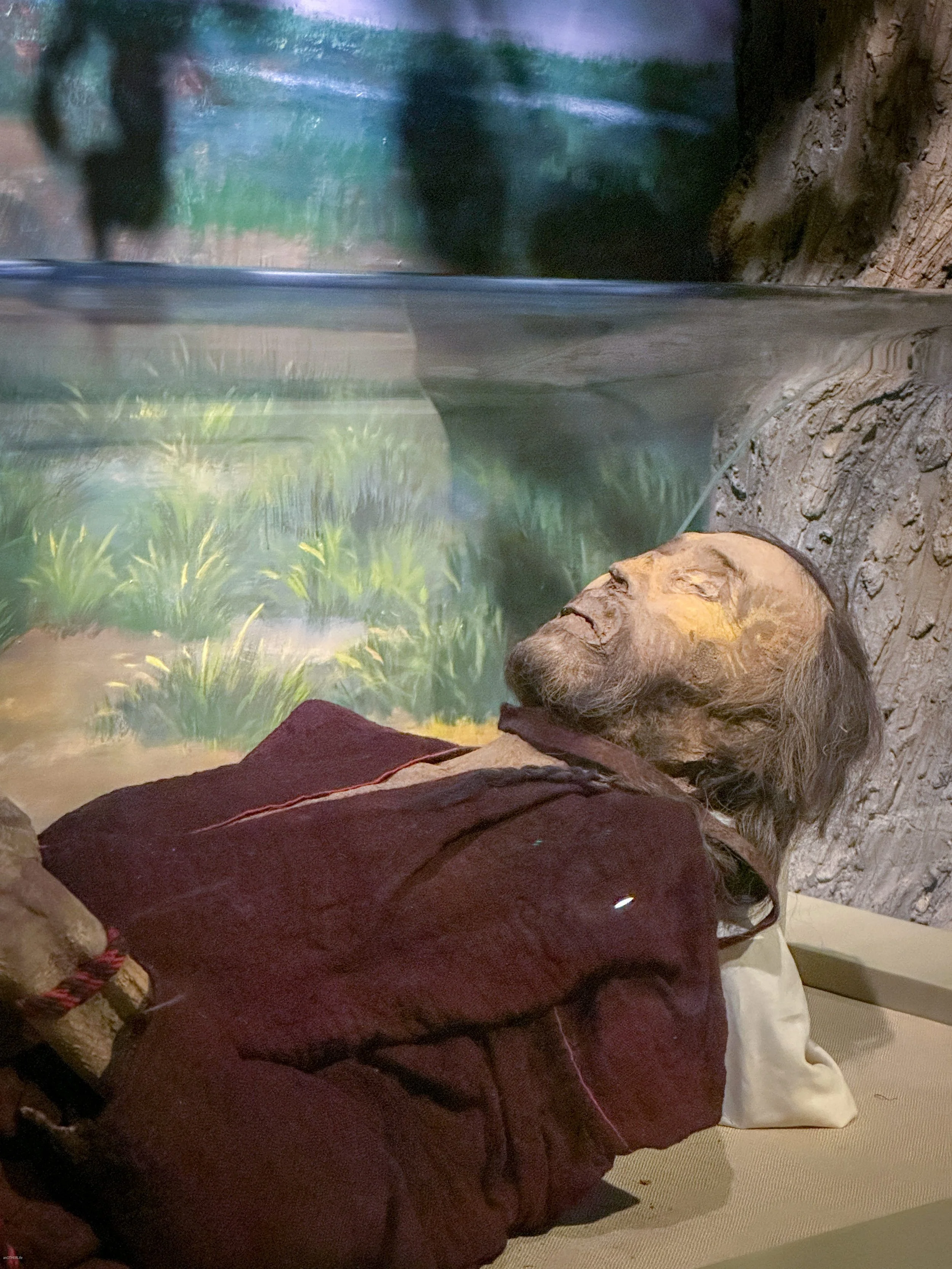
This Tarim Basin mummy, over 3,000 years old, remains remarkably well preserved thanks to the region’s dry, salty desert climate — offering a rare glimpse into Xinjiang’s ancient past.
Into the Heartlands
After a few days of roaming the city, sampling fragrant pilafs and lamb skewers, we decide it is time to go deeper — south, toward Kashgar, where Uyghur culture is said to be stronger, more intact, and less diluted.
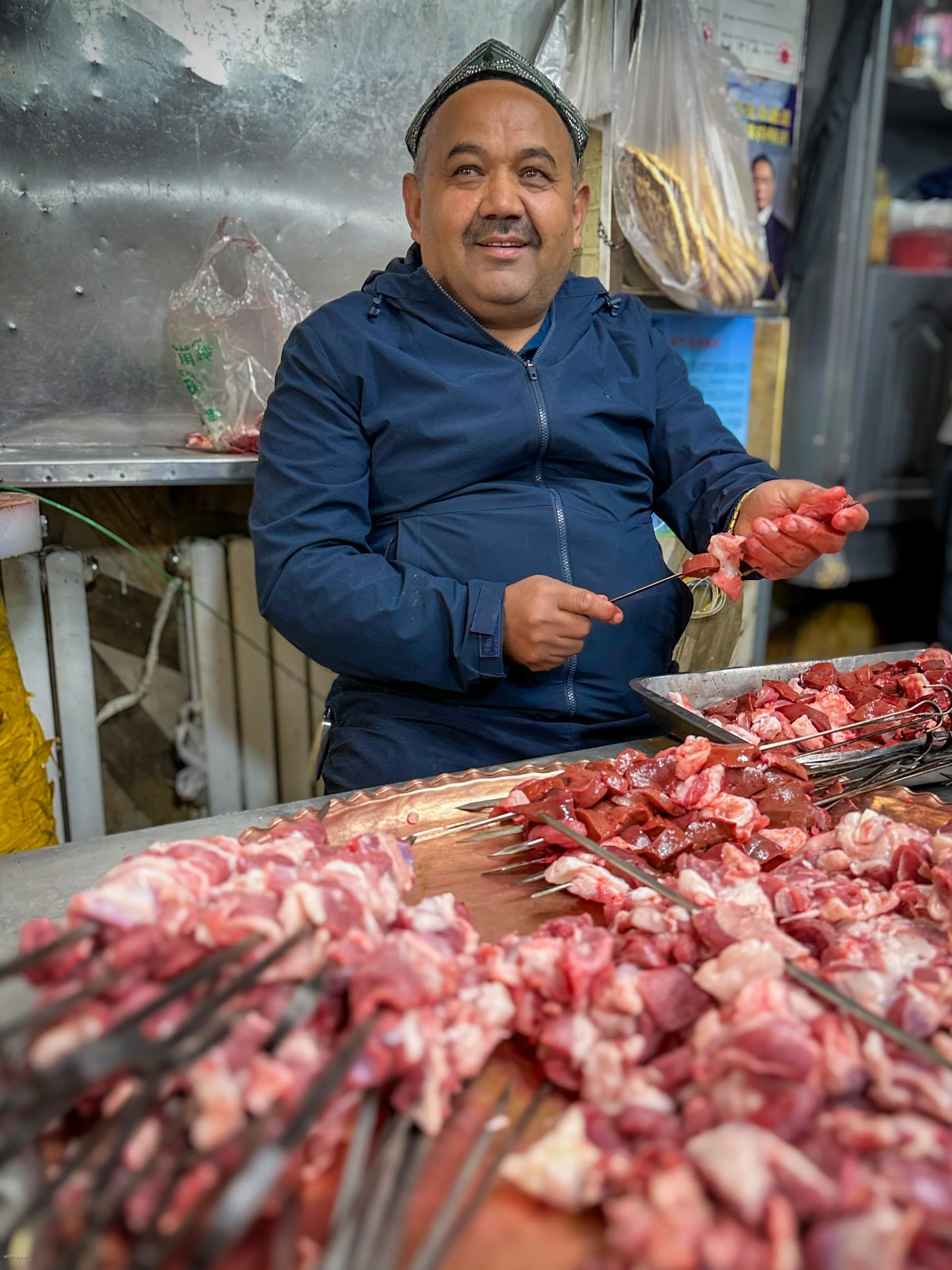
A Uyghur kebab vendor readies his skewers — tender cuts of lamb seasoned with cumin and chilli. Stalls like this dot the streets of Xinjiang, offering one of the region’s most iconic and beloved street foods.
We arrive at the train station — a “maximum security” transport hub — that would put many airports to shame. Rows of security gates, armoured police, sniffer dogs, and X-ray scanners greet us. Our bags pass through, and we are pulled aside.
A security officer finds a bottle of wine in our luggage — something we’d brought for the long overnight ride. He shakes his head. “No alcohol permitted on board,” he says. I am confused by the absurdity of the regulation.
Perhaps emboldened by our earlier successful hotel “negotiation”, I appeal to his softer side, saying that I have trouble sleeping and needed a bit of “help”. He pauses, considers, and — after a few quiet moments — hands the bottle back with a nod and a whisper. “Okay,” he says. “But just don’t let anyone see it.”
Just a week into our journey, we feel the cold tentacles of authority reaching into the everyday. Yet, beyond that iron grip, beneath the stiffened uniforms, we find something unexpected:
Glimmers of warmth and humanity.
This is the second of a 4-part series guest written by my partner S on our experience in China’s Far West, 15 years after riots first broke out in Urumqi. The next part explores Xinjiang through the eyes of Han Chinese settlers.
Part 1: The Foreigner, The Chinese, The Uyghur
Part 3: The Chinese Settler
Part 4: The Uyghur Native
